A combi can’t beat your mains
A combi can only heat the water that comes into the house. If the incoming flow is modest, a bigger boiler just heats the same trickle.
System boilers · Croydon
When 2 showers run at once and nobody wants to wait their turn, a system boiler with a hot water cylinder is usually the answer. We fit them across Croydon, sized to your home and your water supply, with the cylinder chosen to match.
How it works
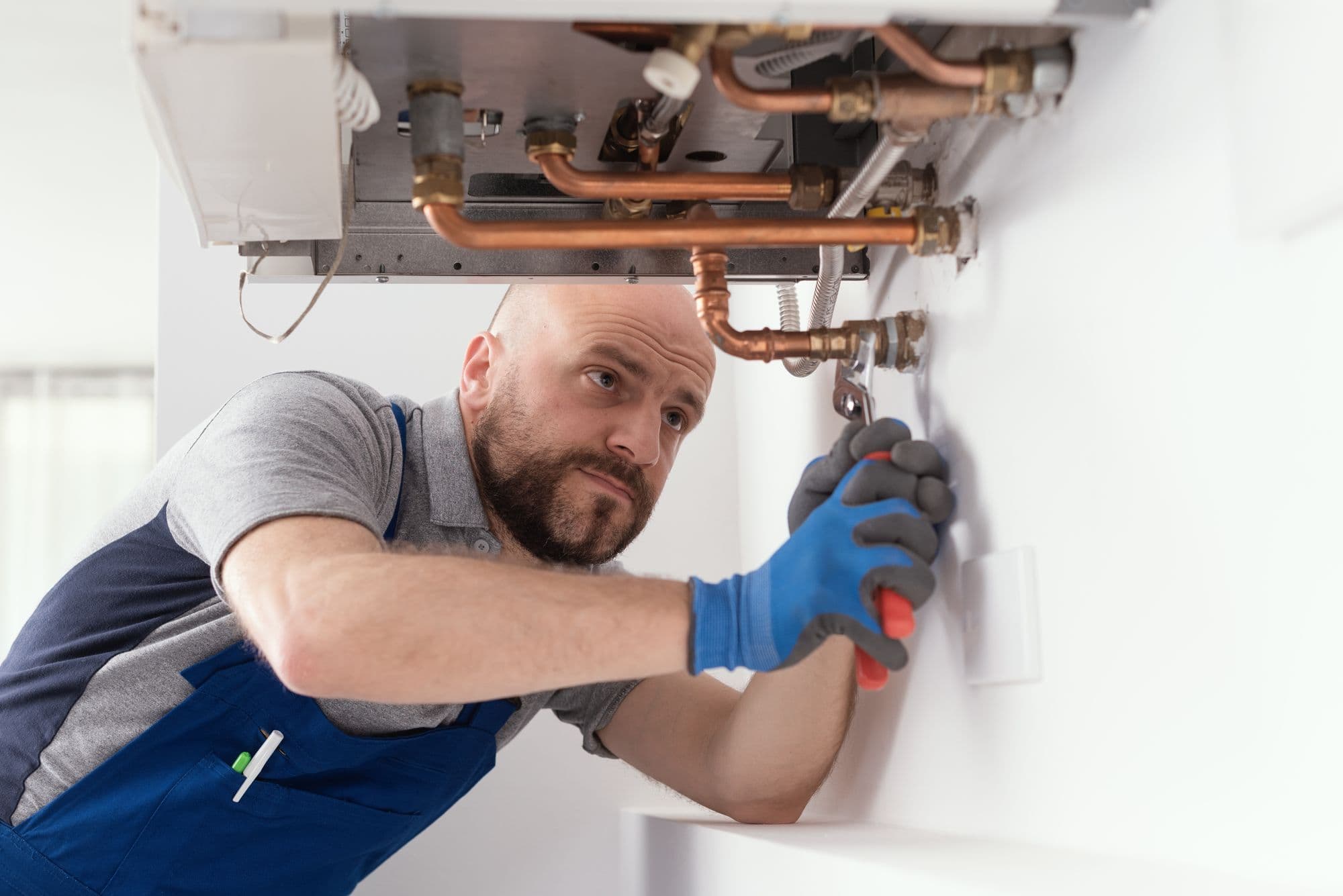
A system boiler heats your radiators and a hot water cylinder, usually in an airing cupboard. The pump and expansion vessel are built into the boiler, so the heating runs as a sealed system with no small tank in the loft to top it up.
Because the hot water is made in advance and stored, several taps and showers can draw on it at the same time. That’s the whole point. A combi heats water as it flows, so it has to share what it makes between every tap that’s open.
The trade-off is space and planning. You need room for a cylinder, and once the stored hot water is used up the cylinder takes time to reheat. Size it properly and most households never notice. Get it wrong and the last person in the queue gets a cool shower.
The obvious question
It’s what plenty of people ask, and for some homes a larger combi is fine. Here’s why it often isn’t in a bigger house.
A combi can only heat the water that comes into the house. If the incoming flow is modest, a bigger boiler just heats the same trickle.
Open a second shower on a combi and both lose flow, and often temperature. A cylinder has hot water ready for both.
In a big house the furthest bathroom can be a long way from a combi in the kitchen. A cylinder near the bathrooms can shorten the wait for hot water.
Most cylinders have an immersion heater. If the boiler stops, you can still heat water with electricity while it’s fixed.
The cylinder
A system boiler works with either. The difference is where the cold water comes from, which decides how your showers feel.
| Vented cylinder | Unvented cylinder | |
|---|---|---|
| Fed from | A cold water tank in the loft | The cold mains, directly |
| Shower pressure | Set by the height of the loft tank. Upstairs showers often need a pump | Mains pressure at every tap, if your supply is strong enough |
| Loft tanks | The cold water tank stays. The small heating tank can go | Both loft tanks can go |
| Safety devices | Simple. It’s open to the tank, so pressure can’t build up | Relief valves, an expansion vessel and a discharge pipe to a safe place |
| Who can fit it | A heating engineer | Someone with an unvented hot water qualification (G3) |
| Upkeep | Very little | An annual check of the safety devices, which manufacturers ask for |
An unvented cylinder depends on your mains flow just as a combi does. We measure it before recommending one, and we’ll confirm on your quote who will fit and sign off the cylinder.
Sizing guide
A rough guide for Croydon homes. Bigger isn't better: an oversized boiler cycles on and off and wastes gas. We confirm the size by checking your water pressure and flow rate on the day of the survey.
| Home | Bathrooms | Usually suits | Output |
|---|---|---|---|
| Flat or 1 to 2 bed house | 1 bathroom | Combi | Around 24 to 28kW |
| 3 bed house | 1 bathroom | Combi | Around 28 to 32kW |
| 3 to 4 bed house | 1 bathroom + en-suite | Larger combi | Around 32 to 38kW, if mains flow allows |
| 4 bed or more | 2+ bathrooms used at once | System boiler + cylinder | Sized to the home’s heat loss |
What good looks like
The boiler gets the attention, but the cylinder, controls and clean system water decide how well it works. Check your quote covers all of these.
Chosen for your hot water demand and the home’s heat loss, with mains pressure and flow measured on the survey. Not just the biggest one on the van.
Flue terminals must sit clear of windows, doors, boundaries and eaves. A new flue kit goes in with every boiler.
Catches the rust and sludge that circulate in older systems before they reach the boiler’s heat exchanger.
Combis can need more gas than the boiler they replace. The pipe from the meter is checked and upgraded if it’s too small.
Routed inside to a drain where possible. Outside runs are kept short, insulated and wide enough not to block in a frost.
Time and temperature control as a minimum, and on a combi an extra energy-saving measure such as a smart thermostat with optimisation.
Radiators and pipes flushed, then dosed with inhibitor to slow new corrosion. Required by the regulations and by every manufacturer.
Gas pressure and combustion checked with an analyser, the Benchmark checklist completed, Building Control notified and the warranty registered.
Near you
What the job usually looks like in the homes of each area, from the people who do it there.
FAQ
Both heat a hot water cylinder. A regular boiler also relies on a small tank in the loft to fill and top up the heating. A system boiler has the pump and expansion vessel built in, so the heating is sealed and that tank isn’t needed. See regular boilers.
No. A system boiler works with a vented cylinder fed from a loft tank, or an unvented one fed from the mains. Unvented gives mains-pressure showers but needs good mains flow and a G3-qualified installer. We’ll tell you which suits your home.
Often, yes. Many homes in Sanderstead, Purley and Shirley have 2 or 3 bathrooms, and that’s where stored hot water earns its keep. It depends on how many showers run at once, not just bedrooms.
A properly sized cylinder covers a normal busy morning. If everyone has long baths back to back, it can run low and then needs time to reheat. We size the cylinder to your household, not the other way round.
Yes, if you have room for a cylinder. It means fitting the cylinder and new pipework to it, so it’s a bigger job than a straight swap. Tell us in the quote form message box and we’ll price it.
Guides
New boilers
Conversions
Repairs & servicing
Tell us how many bathrooms you have and where the cylinder is. Photos help us price it without a visit.