Windows close by
Fumes must not be able to drift back in through an opening window. In a block, there may be one above, below and beside yours.
Flats and maisonettes · Croydon
A boiler in a flat comes with a few extra questions: where the flue can go, who owns the outside wall, and how a new boiler gets up 3 flights of stairs. We sort those out before the day, so the installation itself is straightforward.
Why flats are different
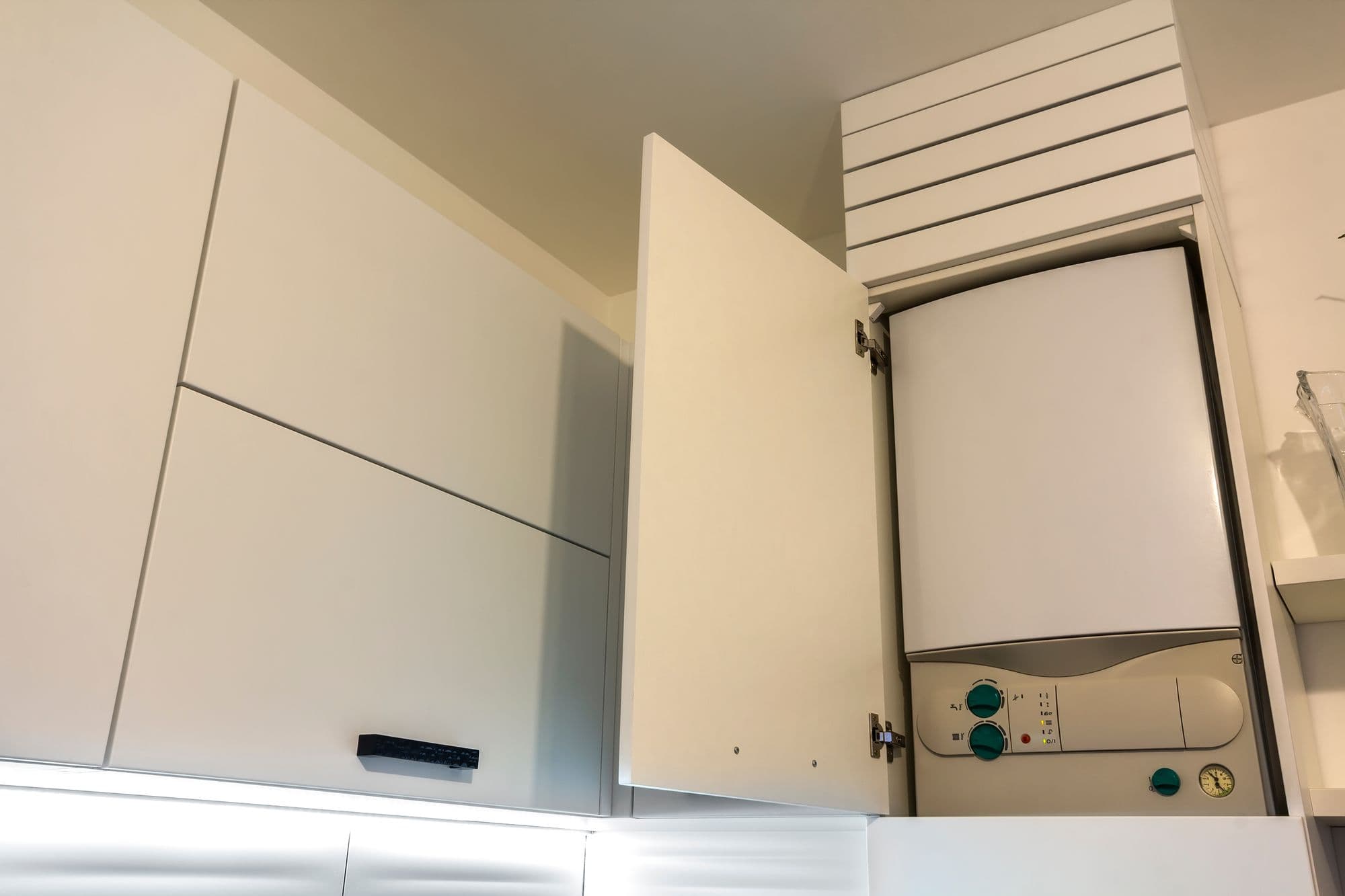
Most flats in Croydon run a combi in a kitchen cupboard or hallway, with a flue straight out through the wall. A like-for-like swap in the same spot is usually a 1-day job, just as it is in a house.
What changes is the building around it. If you’re a leaseholder, the outside walls often belong to the freeholder, and your lease may say you need their consent before altering them. Moving a flue, or making a new hole, is the kind of change that can need it.
Flue rules are also harder to meet in flats, where windows, balconies and walkways are close together. We check the position against the manufacturer’s instructions and the relevant standards before we quote, not on the day.
The flue
Flue position is regulated near windows, doors, boundaries and eaves, and set by the manufacturer’s instructions and the relevant standards.
Fumes must not be able to drift back in through an opening window. In a block, there may be one above, below and beside yours.
Where the terminal can stay but the fumes are a nuisance, a plume management kit can move where they come out, within the maker’s limits.
A vertical flue through the roof is sometimes an option. It’s work on a shared roof, so consent matters even more.
Some blocks have one flue serving several flats. Only boilers approved for that kind of flue can go on it, which narrows the choice.
Before we start
For a like-for-like swap in the same position, consent is often not needed, but leases vary. A new flue position often does need it.
If consent is needed, we’ll give you the boiler details and flue position to send them, so they know exactly what’s planned.
A van close by matters when carrying a boiler and old parts. Let us know about permits or pay-and-display in the quote form.
We’ll plan for carrying everything up. If the lift needs booking or protecting, tell us before the day.
In some blocks the meter is in a landing cupboard or a meter room downstairs. A long gas run may need a bigger pipe for a combi.
We turn the water to your flat off at your stop tap. If it’s shared, or you’re not sure where it is, tell us before the day.
Tight spaces
Flat kitchens rarely have spare wall. Compact combis are built to fit standard kitchen cupboards, but every boiler needs the service clearances its manufacturer sets, so an engineer can work on it later. We check the cupboard before we choose the model.
Condensing boilers produce a small, steady flow of acidic water that has to drain away. In a flat there’s often no outside drain nearby, so the condensate usually runs to the kitchen sink waste or the washing machine waste inside. Where there’s no fall to a drain, a small condensate pump can lift it.
Keeping the condensate pipe indoors also stops it freezing in a cold snap, a common cause of winter breakdowns for boilers with long outside runs.
What good looks like
The same 8 things matter in a flat as in a house. The flue and condensate just need more thought.
Chosen for your hot water demand and the home’s heat loss, with mains pressure and flow measured on the survey. Not just the biggest one on the van.
Flue terminals must sit clear of windows, doors, boundaries and eaves. A new flue kit goes in with every boiler.
Catches the rust and sludge that circulate in older systems before they reach the boiler’s heat exchanger.
Combis can need more gas than the boiler they replace. The pipe from the meter is checked and upgraded if it’s too small.
Routed inside to a drain where possible. Outside runs are kept short, insulated and wide enough not to block in a frost.
Time and temperature control as a minimum, and on a combi an extra energy-saving measure such as a smart thermostat with optimisation.
Radiators and pipes flushed, then dosed with inhibitor to slow new corrosion. Required by the regulations and by every manufacturer.
Gas pressure and combustion checked with an analyser, the Benchmark checklist completed, Building Control notified and the warranty registered.
Installation day
A like-for-like replacement is usually done in a day. Conversions and moving the boiler add a day or two, and we’ll tell you the plan in advance.
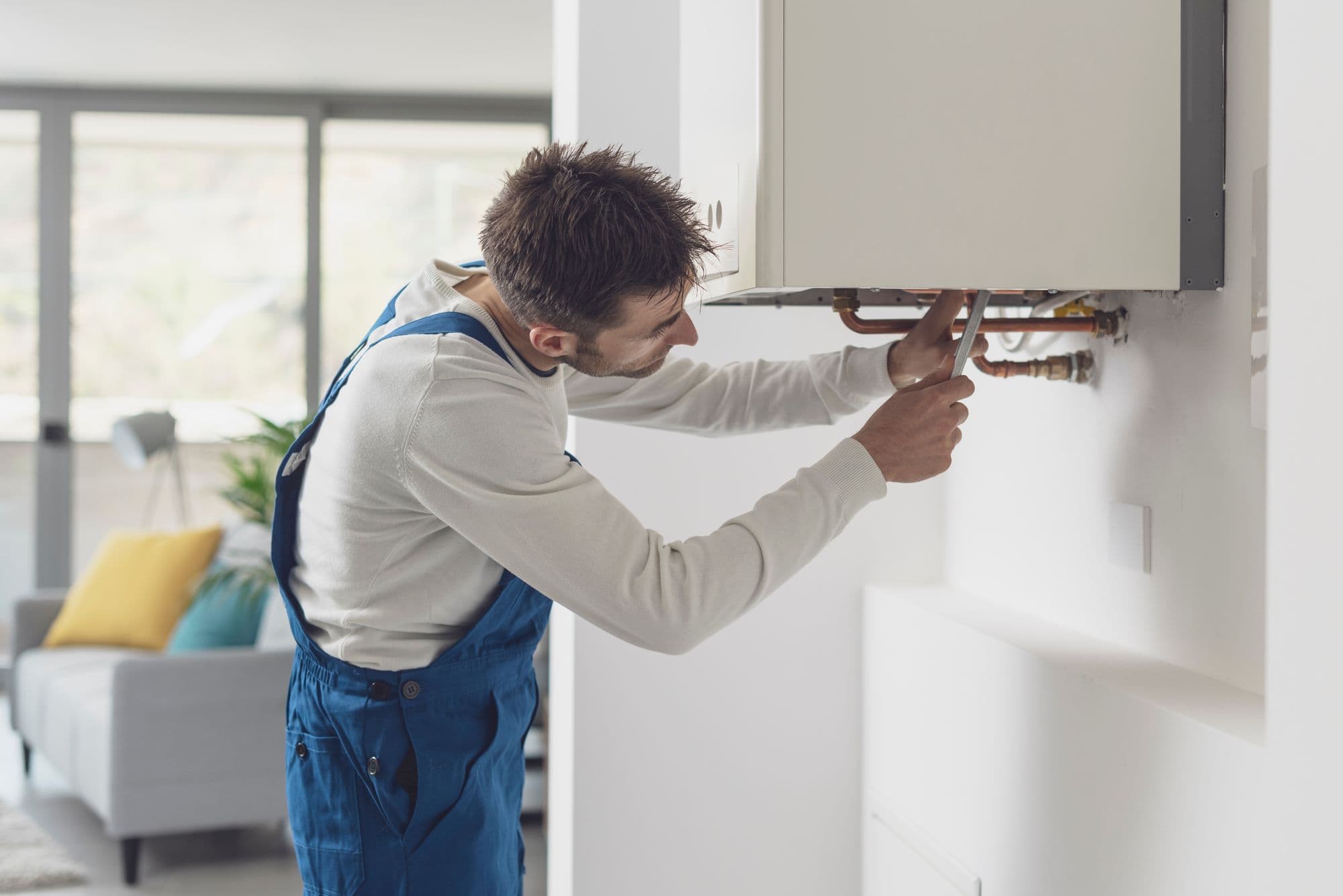
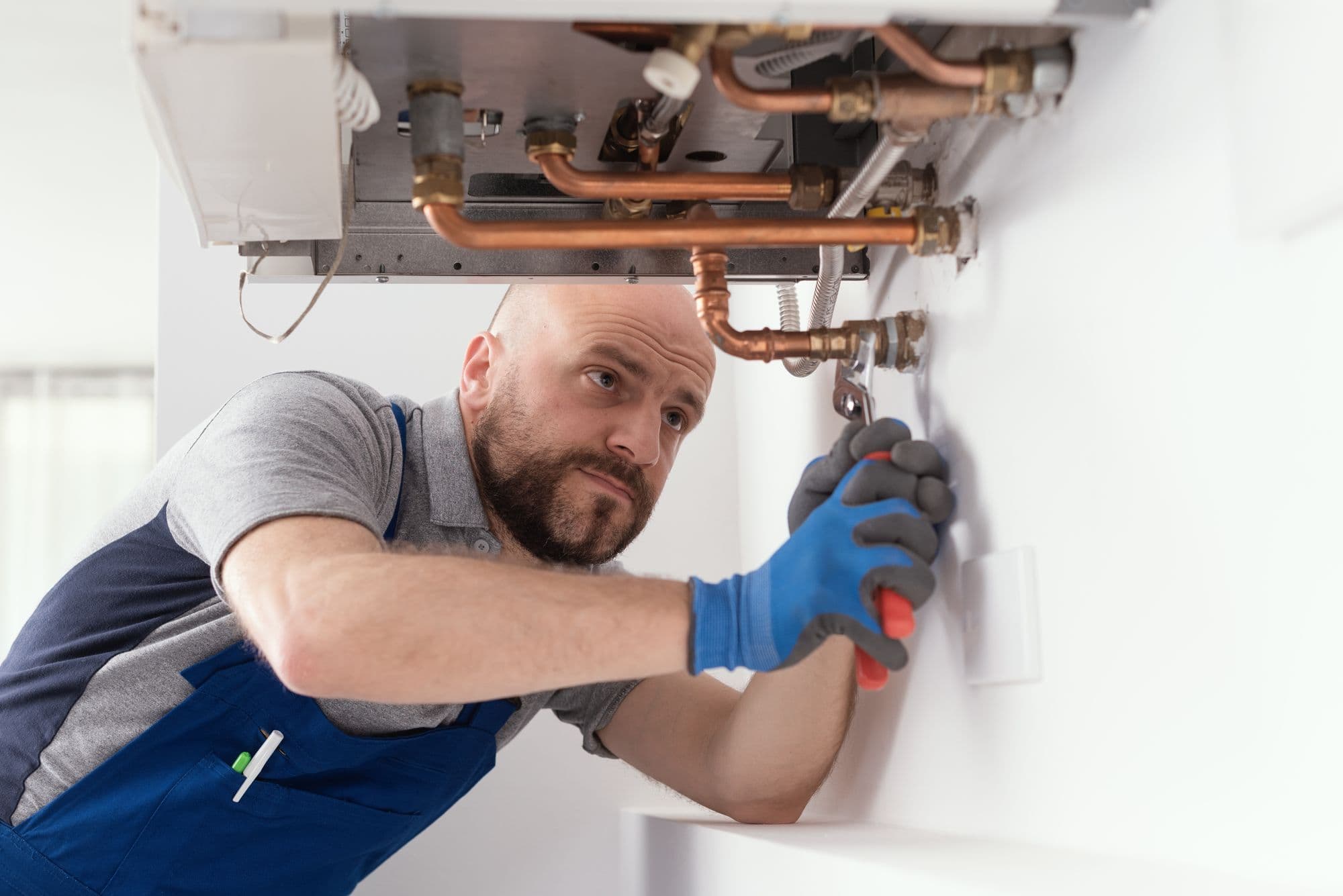
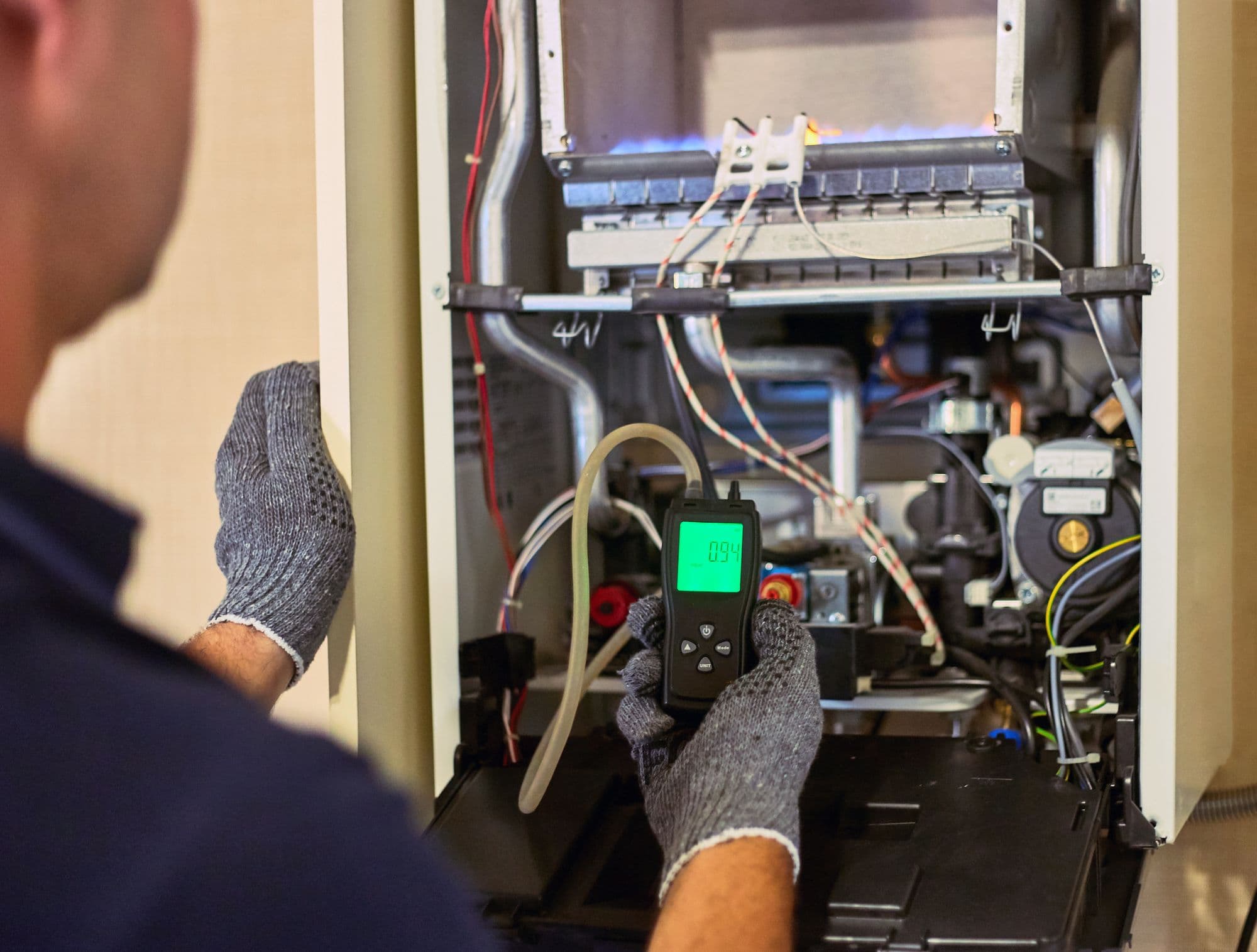
We protect floors and the route to the boiler, then isolate the gas, water and power.
The old boiler is drained and removed. If tanks or a cylinder are going too, they come out now.
The radiators and pipes are flushed so the new boiler starts on clean water.
The new boiler goes up with its flue, filter, condensate drain and controls, and the pipework is tidied.
Gas tightness and combustion are checked with an analyser, inhibitor is added and the flow temperature set for efficiency.
A walk-through of the boiler and controls, the Benchmark checklist handed over, and the warranty and Building Control paperwork underway.
FAQ
For a like-for-like swap in the same position, often not, but leases vary, so check yours. For a new flue position or a hole in the outside wall, consent is often needed. We’ll give you the details to send them.
Usually, but only with a boiler approved for that type of shared flue, and the choice of models is smaller. A photo of the boiler and any label on the flue helps us identify it.
Yes. Tell us the floor and whether there’s a lift. If the flue exits high up on the outside wall, we’ll plan for safe access to it.
If you rent from a housing association or council, the boiler usually belongs to them and they arrange its replacement. Contact them first. If you own your flat, we can help.
Sometimes. It needs a flue route that meets the rules, a gas supply, a condensate drain and enough clearance around it. See boiler relocation and send us photos of both spots.
Guides
New boilers
Conversions
Repairs & servicing
Add a photo of the boiler and the flue from outside, and tell us the floor. It’s the quickest way to an accurate price.