The short version
- Bleed a radiator when it is cold at the top and warm at the bottom.
- Turn the heating off and let the radiators cool before you start.
- On a combi or system boiler, check the pressure afterwards and top up through the filling loop if it has dropped.
- Cold at the bottom is usually sludge, not air. Bleeding won’t fix it.
The short answer
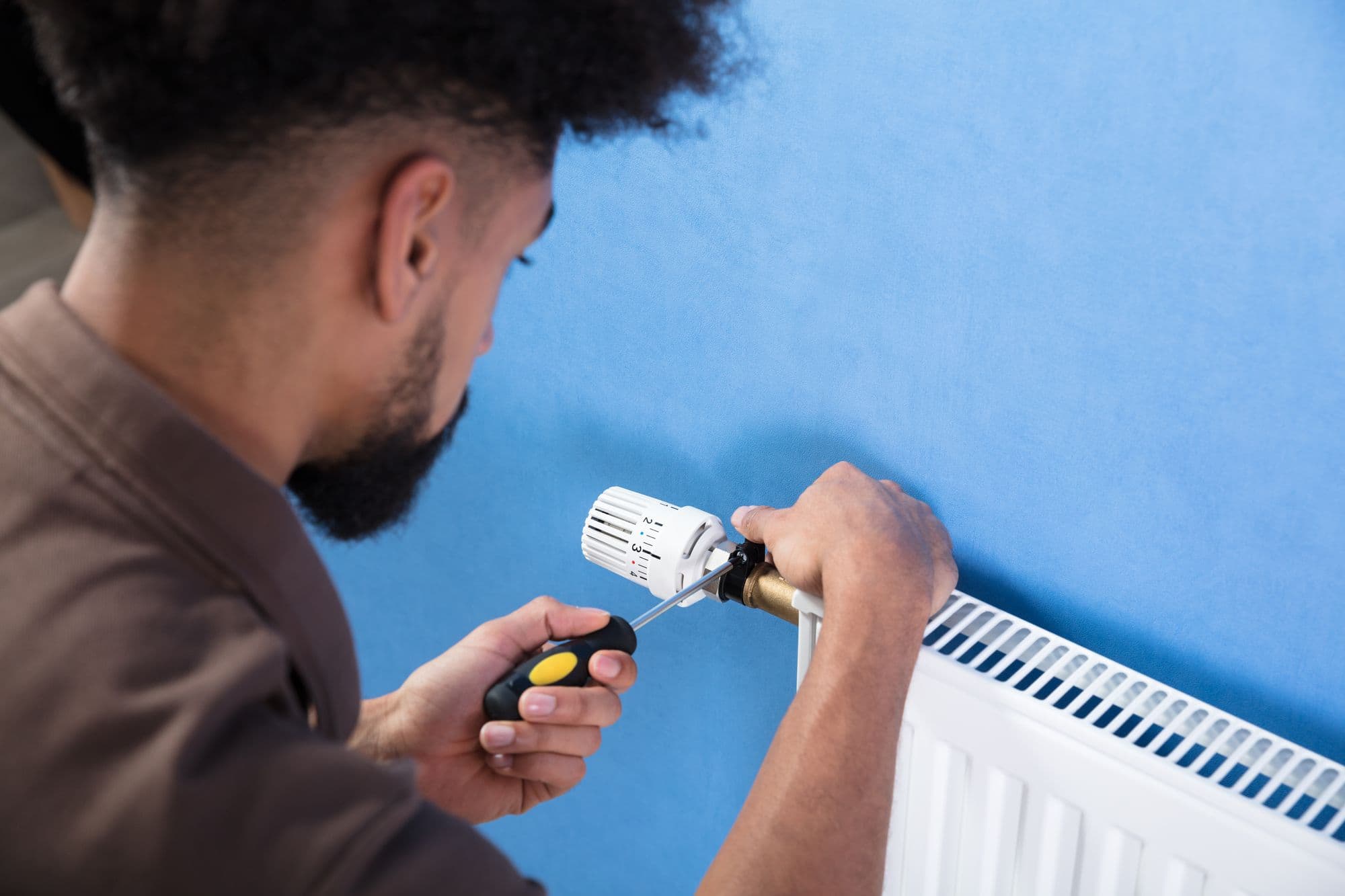
With the heating off and the radiators cool, put a radiator key on the bleed valve at the top corner of the radiator, hold a cloth underneath, and turn it slowly anticlockwise until you hear air hissing out. When water starts to come out, close it again. Then check the pressure on your boiler and top it up if needed.
It’s one of the few heating jobs that is safe to do yourself, and it’s worth doing at the start of each heating season on any radiator that isn’t heating evenly.
Bleeding only lets out trapped air. It won’t clear sludge, free a stuck valve or fix a fault in the boiler. If a radiator is still cold after bleeding, or several radiators are cold, the cause is somewhere else, and the sections below explain what to look for.
When a radiator needs bleeding
Air collects at the top of a radiator because it’s lighter than water. The trapped air stops hot water filling the radiator, so the top stays cool. Signs include:
- The radiator is warm at the bottom but cold or cooler at the top.
- Gurgling or trickling sounds from the radiator or pipes.
- Rooms taking longer to warm up than they used to.
If the radiator is cold at the bottom and warm at the top, or has cold patches in the middle, that’s usually sludge, not air. See the section on sludge below.
What you need
- A radiator key. A small metal key that fits the square bleed valve, sold at hardware shops. Some radiators have a valve you can turn with a flat screwdriver instead.
- A cloth or old towel to hold under the valve and catch drips.
- A small bowl or container in case more water comes out than expected.
- Your boiler manual, so you can check and top up the pressure afterwards.
Radiators still cold? Book a service or flushTwo minutes, no obligation, a Gas Safe engineer replies.
Start my quoteStep by step
- 1Turn the heating off and wait until the radiators are cool. Water from a hot radiator can spray out and scald.
- 2Find the bleed valve, a small fitting at one of the top corners of the radiator.
- 3Hold the cloth under the valve, fit the key, and turn it slowly anticlockwise, about a quarter to half a turn. Don’t unscrew it all the way.
- 4You’ll hear a hiss as air escapes. Keep hold of the key and wait.
- 5When a steady drip or trickle of water appears, turn the key clockwise to close the valve. Don’t over-tighten it.
- 6Wipe up any water, and repeat on any other radiators that were cold at the top.
- 7Check the boiler pressure, top it up if needed, then turn the heating back on and check the radiators warm evenly.
Look at the water that comes out. Clear or slightly cloudy water is normal. Black or dark brown water is a sign of sludge in the system.
If air keeps hissing out for a long time without any water following, close the valve and check the boiler pressure. On a sealed system, the pressure may be too low to push water up to the valve, and you’ll need to top it up before carrying on.
Check the pressure afterwards
On a sealed system, which includes most combi and system boilers, letting air out lowers the pressure. If you’ve bled several radiators, the gauge may have dropped below the normal range and the boiler may stop working. Top it up through the filling loop to around 1 to 1.5 bar when cold, or the figure in your manual. Our guide to repressurising a boiler takes you through it.
On an older open-vented system with a regular boiler and tanks in the loft, the system tops itself up from the feed tank, so there’s no pressure gauge to check.
If you find yourself bleeding the same radiators every few weeks, air or gas is getting into the system from somewhere. That can mean a small leak or corrosion inside the system, and it’s worth having it checked at your next boiler service.
Radiator cold all over?
If a radiator stays cold from top to bottom while the others are hot, bleeding probably won’t help. Check the simple things first:
- Is the thermostatic valve (the numbered head on one side) turned up? Turn it to the highest setting and wait.
- Is the room thermostat calling for heat, and is the heating timer on?
- Are other radiators on the same floor warm? If several are cold, the problem is more likely the boiler, the pump or the controls.
A thermostatic valve can stick shut, especially after a summer when the heating has been off. If turning it up doesn’t help, or the whole house is cold, book a boiler repair and tell us which radiators are affected. Don’t take valves apart or drain radiators yourself.
Cold at the bottom? That’s sludge
Over the years, rust from the inside of radiators and pipes forms a black sludge called magnetite. It settles at the bottom of radiators, where it blocks the flow and leaves a cold patch. Bleeding won’t shift it.
Sludge also makes the boiler work harder, and can cause noisy kettling and failed pumps. The fix is a system clean, often a power flush, followed by inhibitor to slow the corrosion down and a magnetic filter to catch what’s left. If you’re having a new boiler fitted, the system is cleaned as part of the job.