The short version
- A like-for-like replacement is usually done in a day. Moves and conversions add a day or two.
- Clear the space around the boiler and the route to it, and know where your stopcock and gas meter are.
- Sort parking and keep pets in another room, as doors will be open and tools out.
- The system should be cleaned and dosed with inhibitor, and the boiler tested with a flue gas analyser.
- Before the engineer leaves, you should be shown the controls and get the Benchmark checklist.
The short answer
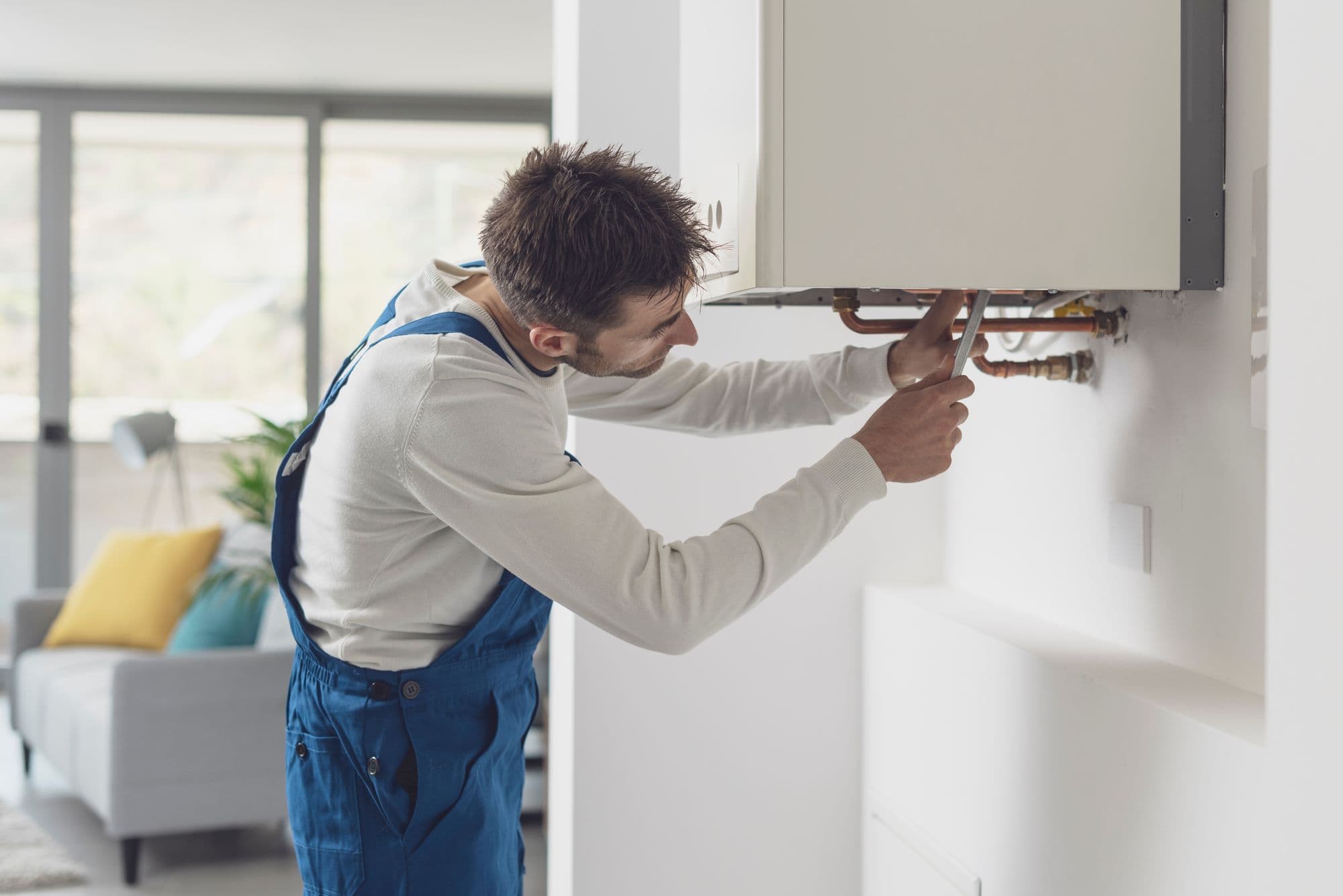
On the day, the engineers arrive, protect your floors and turn off the gas, water and power to the boiler. The old boiler is drained and removed, the heating system is cleaned, and the new boiler goes up with its flue, filter, condensate drain and controls. It is then filled, tested for gas tightness and checked for safe combustion, and the engineer shows you how to use it. A like-for-like swap usually fits into a single day. Boiler conversions and moves take a day or two longer.
You don’t need to be home all day, but someone should be there at the start to let the engineers in and at the end for the handover.
How to prepare the day before
- Clear access: empty the cupboard around the boiler and clear a path from the front door to it. If tanks are coming out of the loft, clear the space under the hatch and around the tanks.
- Parking: engineers carry heavy boilers and tools, so a space close to the door helps. If you are in a permit area, check whether a visitor permit is needed and have it ready.
- Pets: keep pets in a room away from the work. Doors will be open, and there will be tools, fittings and hot pipes about.
- Stopcock: find your main water stopcock, often under the kitchen sink or where the water pipe enters the house, and check it turns. It is useful for you to know anyway.
- Gas meter: make sure the meter and its valve can be reached, and that any meter cupboard opens.
- Smart controls: if a smart thermostat is part of the job, have your Wi-Fi name and password to hand.
Arrival and taking the old boiler out
The first job is protecting your home. Dust sheets go down on the floors and along the route to the boiler. The engineer then isolates the gas supply, turns off the water and switches off the power to the boiler, and talks you through anything they spotted on arrival.
The old boiler is drained and disconnected, then taken off the wall. The old flue comes out too, and the hole is made good or adapted for the new flue. If tanks or a cylinder are being removed as part of a conversion, this is when they come out. The old boiler and anything removed with it should be taken away, which your quote should say.
Ready to book your installation?Two minutes, no obligation, a Gas Safe engineer replies.
Start my quoteCleaning the system
Old heating systems collect sludge and rust in the radiators and pipes. Connect a new boiler to that and the debris goes straight into its heat exchanger. So the system is cleaned before or as the new boiler goes in, to the standard set out in BS 7593. On most jobs that means a chemical clean and flush. A heavily sludged system may need a power flush, which your quote should mention if so.
A magnetic system filter is fitted on the return pipe under the boiler. It keeps catching debris for the life of the boiler and is cleaned out at each service.
Fitting the new boiler
The new boiler is hung on its bracket and connected to the gas, heating flow and return, and on a combi the cold mains and hot water outlet. A new flue kit is fitted. Flue position is regulated near windows, doors, boundaries and eaves, and set by the manufacturer’s instructions and the relevant standards, so the engineer checks it rather than assuming the old position still works.
The condensate pipe, which carries away the water a condensing boiler produces, is routed to a drain, inside where possible. Outside runs should be kept short and protected so they don’t freeze. Then the controls are fitted: in England every new gas boiler needs time and temperature controls, and a combi needs an extra energy-saving measure under Boiler Plus. Our smart thermostat installation page covers the options.
Testing and commissioning
- 1The gas pipework is tested for tightness before the boiler is lit.
- 2The system is filled, pressurised if it is a sealed system, bled of air and checked for leaks.
- 3The boiler is fired and its combustion checked with a flue gas analyser, along with the gas pressure and flow.
- 4Inhibitor is added to the system water to slow new corrosion.
- 5The flow temperature and controls are set up so the boiler runs efficiently.
- 6The Benchmark commissioning checklist is filled in and signed.
The handover and paperwork
Before leaving, the engineer should show you the boiler and controls: how to set the heating times and temperatures, how to check and top up the pressure if it is a sealed system, where the filling loop is, and what to do if it shows a fault. Ask anything you are unsure of while they are there.
You should be given the manuals and the completed Benchmark checklist. The warranty is registered with the manufacturer, and the installation is notified to Building Control through the Gas Safe Register, who post you a Building Regulations Compliance Certificate. Keep all of it together. See boiler replacement for what we include as standard.
In the first few weeks, small amounts of air left in a freshly filled system can work their way to the radiators, and the pressure on a sealed system may drop slightly as it settles. Bleeding a radiator that is cold at the top, or topping the pressure up through the filling loop as the manual explains, is normal and safe to do yourself. If the pressure keeps dropping, or you see water anywhere it shouldn’t be, call the installer. Then book the first service for about 12 months after the installation to keep the warranty valid.